When my son was in kindergarten, his school had a giant wall covered in various textiles. It was so irresistible that no one — including myself — could walk by without running our fingers across the different fabrics. It was a built-in invitation to engage the mindful sense of touch.
During COVID, however, the wall became off-limits. And with it, so did an important opportunity for mindful sensory regulation. At a time when we couldn’t freely and comfortably touch things, we also lost access to one of our most natural tools for self-soothing and emotional regulation.

Why the Sense of Touch Is So Important for Emotional Regulation
Our sense of touch begins developing in the womb at just eight weeks into pregnancy. From that early stage, the skin becomes one of our primary ways of understanding and interacting with the world. Even at 6 months old, my son found comfort in a particular fabric that became his safety blanket for the rest of his childhood years. Through touch, we can distinguish silk from cotton, notice a tiny rock in our shoes, or feel a warm breeze across our face.
Researchers at Harvard Medical School have found that a significant portion of the brain is devoted to processing sensory input from the skin — especially in highly sensitive areas like the hands and face. This helps explain why tactile experiences can have such a strong impact on our survival and our nervous system.
Helen Keller, who was deaf and blind, beautifully captured the richness of touch in her essay A Chat About the Hand:
“Every object is associated in my mind with tactual qualities which, combined in countless ways, give me a sense of power, of beauty, or of incongruity: for with my hands I can feel the comic as well as the beautiful in the outward appearance of things.”

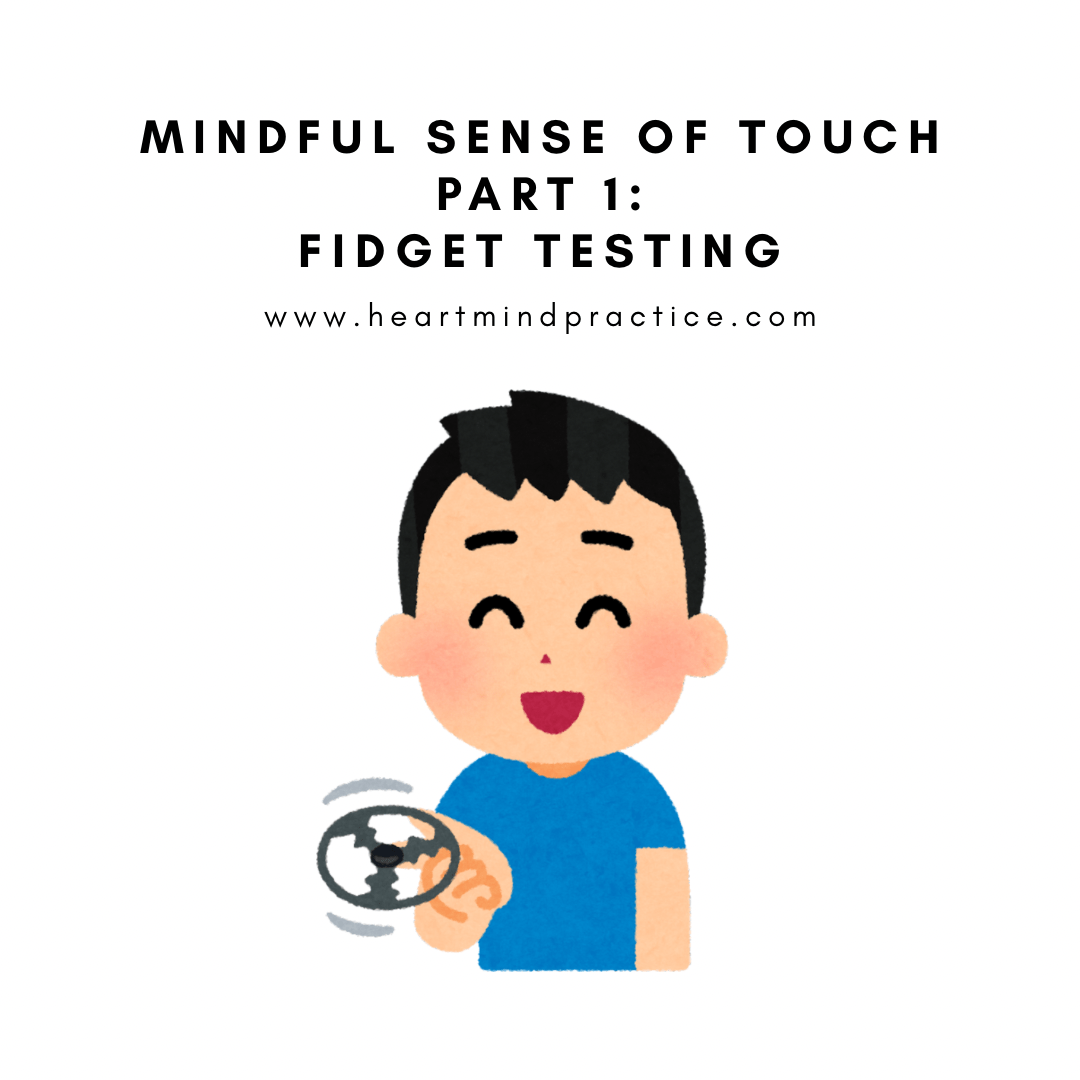
In the DBT groups I run for teens, one of the most popular modules is self-soothing using the five senses — particularly touch. To make it engaging, I bring out a variety of objects and fidgets with different textures and physical sensations. I invite the teens to imagine they work for a toy company and need to thoroughly test each product, giving feedback about which ones feel calming, grounding, or soothing.
Some teens gravitate toward soft and smooth textures. Others prefer firm pressure, stretchy resistance, or even textures that might seem scratchy or irritating to someone else. Providing a range of tactile options allows each person to discover what regulates their nervous system.
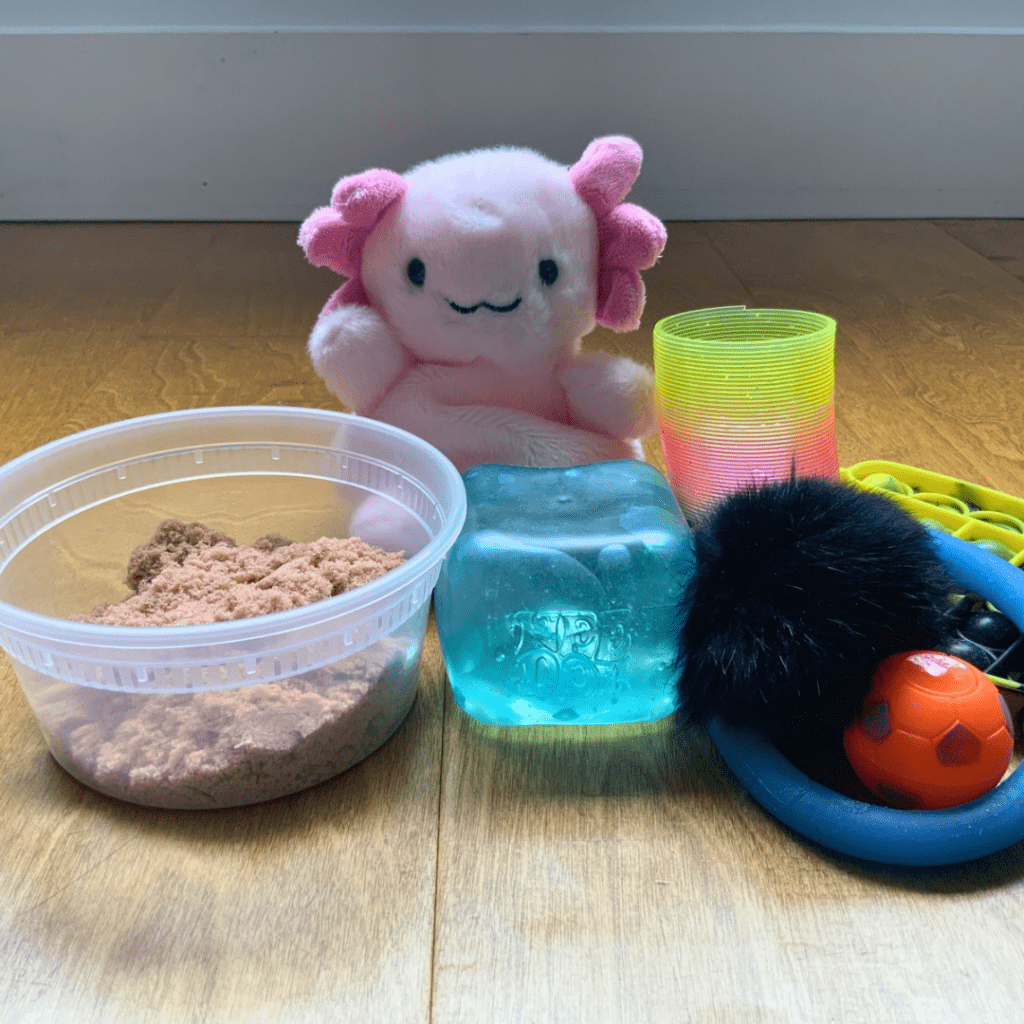
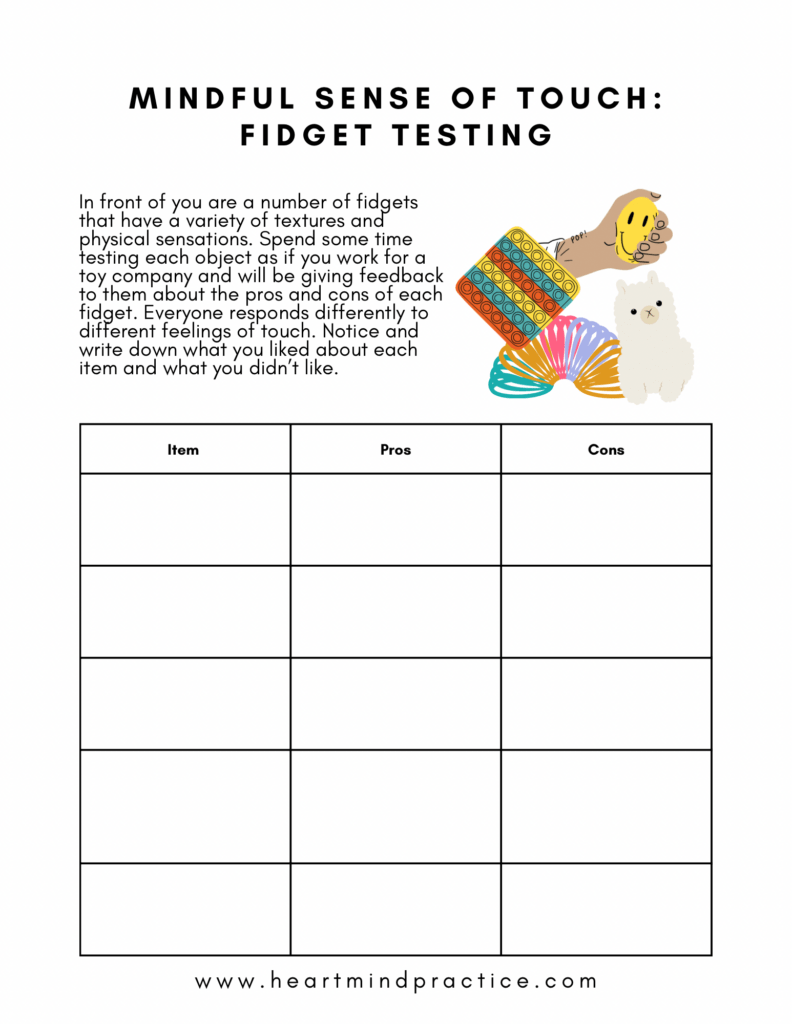
Mindful Sense of Touch Activity: Fidget Testing (Great for Classrooms, Therapy Groups, or Home)
If you’re looking for a practical emotional regulation activity for teens or children, here’s a simple mindful touch exercise:
Step 1: Gather a Variety of Textures
Collect objects or fidgets with different:
- Textures (smooth, rough, bumpy, soft)
- Temperatures (cool stone, warm fabric)
- Weights (light vs. slightly weighted)
- Resistance (stretchy, firm, squishy)
Step 2: Create Exploration Stations
Place the objects around the room so participants can rotate between stations and mindfully explore each one. Encourage slow, intentional interaction: Notice how it feels in your hands and observe any emotional or physical shifts.
Step 3: Reflect and Record
Have participants jot down notes about: their observations of what was calming vs activating and the pros and cons of each object/fidget.
Step 4: Group Discussion
Invite everyone to share their favourite item and what they noticed about their body’s response.
Why Mindful Touch Matters More Than We Think
In a world that often prioritizes screens and speed, we sometimes forget how grounding the physical world can be. The sense of touch is one of the most accessible and immediate ways to calm the nervous system. Whether through textured walls, fidget tools, weighted objects, or simple items from nature, tactile mindfulness can become a powerful self-soothing strategy for children and teens alike.
Sometimes healing doesn’t require complicated techniques.
Sometimes it starts with simply reaching out — and feeling.