Teaching Kids to Appreciate Where Their Food Comes From
Most of us grow up seeing food appear neatly packaged on grocery store shelves—but have little idea how it actually grows. I still remember the moment I learned that pineapples grow from the ground, not dangling from trees! Growing up in an urban environment, I rarely saw fruits and vegetables connected to the earth. Food simply showed up in stores, ready to take home.
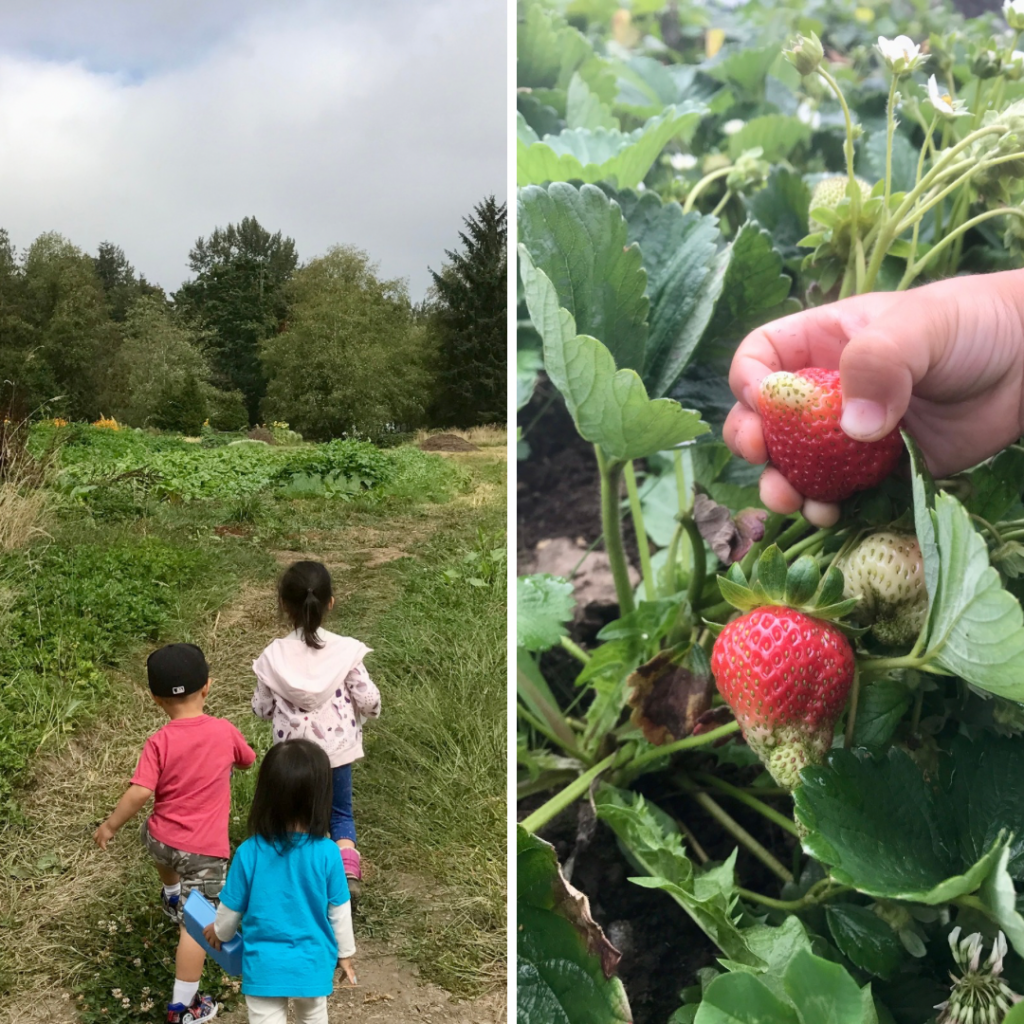
When my brother started a small farm, everything changed. I watched firsthand how much care, time, and effort it takes to grow even a single crop. Seeing a seed transform into something nourishing—through the work of humans and the generosity of nature—gave me a deeper appreciation for every bite. Food tasted richer when I understood where it came from and who helped bring it to the table.
One way to teach this appreciation to children is through Susan Kaiser Greenland’s mindful eating practice: “Thanking the Farmer.” Susan who used to be a lawyer now teaches mindfulness through activity based practices. You can check out her resources on her website.
This simple activity, often done with a single raisin, helps kids slow down and explore the journey food takes from soil to snack. She guides them to say: “Thank you worms! Thank you nature! Thank you farmers! Thank you workers who harvested, dried, and boxed the grapes! Thank you truck drivers! And thank you (to the person who brought it to them)!”
Mindful Eating Activity: Thank the Farmer (adapted from Susan Kaiser Greenland)
Materials: One food item (fruit, vegetable, bread, etc.), sticky notes, or a whiteboard.
Instructions:
1. Show participants the food item.
2. Explain that you’ll work together to map out the journey the food took—from earth to where they’re sitting today.
3. Invite participants (especially older children and youth) to brainstorm each step of the process:
• Where it grows
• Who tends to it
• How it is harvested
• How it travels
• How it gets prepared and purchased
4. Write each step on a sticky note or whiteboard to create a visual “food journey map.”
This is a powerful way to nurture gratitude, deepen food literacy, and help young people appreciate the many hands and elements that nourish us each day.
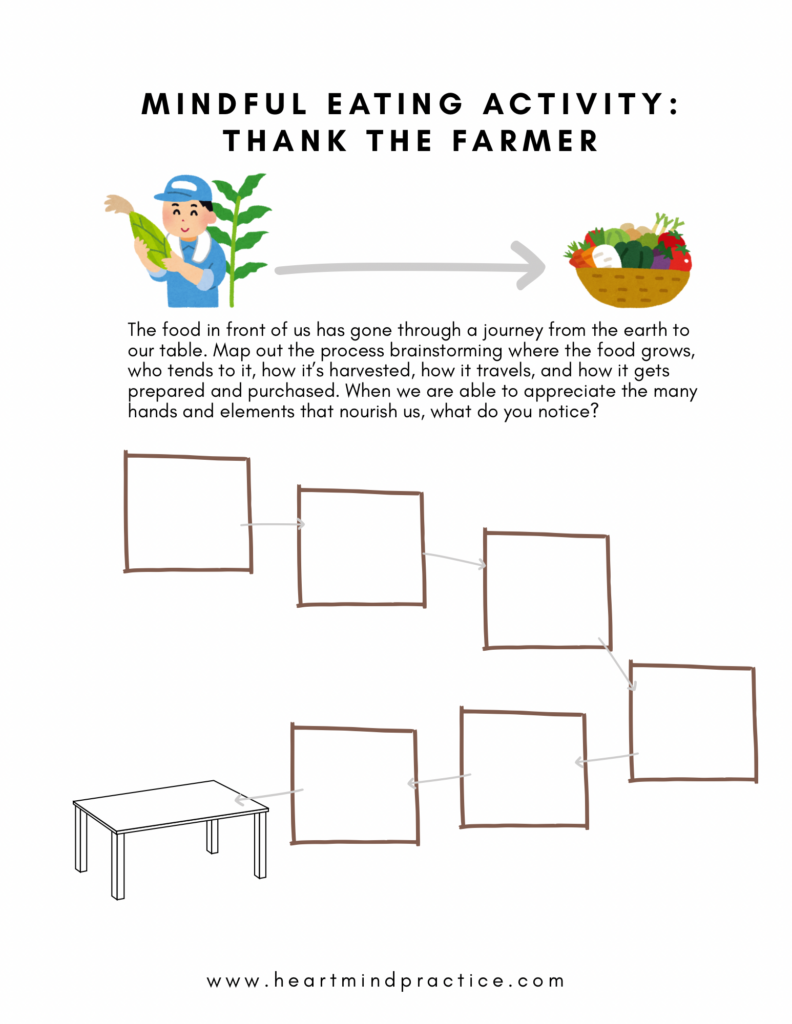
Download the worksheet below:
The next time you eat, will you take a moment to express gratitude to your food for the long journey it travelled to arrive in your home?